SustainabilitySweetNSavour
Zero-Waste Home Cleaning
Published January 9, 2026By Mahmood Rahman
Zero-waste home cleaning focuses on keeping living spaces fresh, healthy, and functional while minimizing waste and avoiding unnecessary chemicals. A growing body of guidance from sustainability organizations and health-focused sources supports replacing many conventional cleaners with a small set of simple, low-toxicity ingredients such as vinegar, baking soda, and mild soap. Even without direct access to external tools right now, the following ideas reflect widely recommended low-waste cleaning practices.
Why Choose Zero-Waste Cleaning?
Zero-waste cleaning reduces both packaging waste and exposure to harsh chemicals commonly found in many conventional products. Fewer plastic bottles, fewer disposable wipes, and fewer synthetic additives mean a lighter footprint for your home and the environment.
Shifting to a minimal set of multi-purpose ingredients also helps simplify cupboards, reduce visual clutter, and save money over time, since core ingredients can be used in many different recipes.
Core Ingredients: Vinegar, Baking Soda, and More
Several basic ingredients can handle most day-to-day cleaning tasks when used correctly. These staples are widely recommended in eco-cleaning guides as effective and versatile options.
- White vinegar: Useful for glass, mirrors, some floors, and general surface cleaning (avoid on natural stone).
- Baking soda: Acts as a gentle abrasive for sinks, tubs, and stubborn residues.
- Castile or other mild liquid soap: Forms the base of many all-purpose and dish-cleaning solutions.
- Essential oils (optional): A few drops of oils such as tea tree, lemon, or lavender can add a pleasant scent and, in some cases, additional antimicrobial properties.
Using these ingredients thoughtfully allows many commercial spray bottles, scrubs, and specialty cleaners to be replaced by a few concentrated staples.
DIY All-Purpose Surface Cleaner
A simple all-purpose spray suits many kitchen and bathroom surfaces. This kind of recipe is often recommended as a starting point for low-waste cleaning routines.
Basic recipe (avoid on stone):
- 1 part white vinegar
- 1 part water
- Optional: 10–20 drops of essential oil (such as lemon or lavender)
Combine in a reusable spray bottle, shake gently, and use with a washable cloth on counters, tiles, stainless steel, and glass, testing on a small area first. For surfaces where vinegar is not suitable, a soap-based cleaner is a better choice.
DIY Gentle Soap-Based Cleaner
For surfaces that should not be exposed to acids—such as marble, some tiles, or natural stone—a mild soap solution is more appropriate.
Basic recipe:
- 500 ml water
- 1–2 teaspoons liquid castile soap
Mix in a spray bottle and use as a gentle cleaner for many sealed surfaces, wiping with a damp cloth and finishing with a dry one if needed to avoid streaks.
DIY Powder Scrub for Sinks and Tubs
A soft scrub can replace commercial scouring powders and cream cleansers. Baking soda is commonly used in such recipes as a mild abrasive that helps lift grime without scratching most surfaces.
Basic recipe:
- Baking soda (as needed)
- Optional: a few drops of liquid soap
- Optional: a few drops of essential oil
Sprinkle baking soda directly onto a damp sink or tub, add a drop or two of soap to your sponge or brush, and scrub. Rinse thoroughly.
DIY Low-Waste Laundry Option (Concept)
Simple ingredients can support low-waste laundry routines, particularly when combined with line-drying and stain pre-treatment. While specific formulations vary, many low-waste guides emphasize:
- Using concentrated, refillable liquid or powder detergents where available.
- Pre-treating stains with a bit of liquid castile soap or a dedicated bar.
- Adding white vinegar in the rinse compartment as a fabric softener alternative (checking machine guidance first).
Refill stations and plastic-free packaging, when available locally, help reduce packaging waste for laundry even further.
Reusable Cleaning Tools
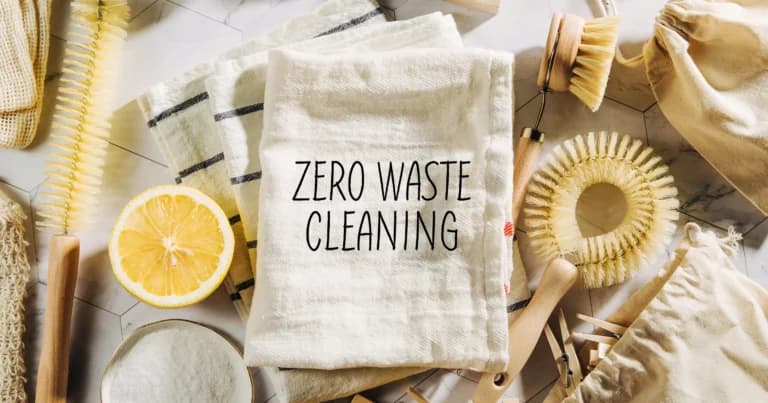
Switching from disposable items to durable, washable tools significantly cuts waste. Many low-waste cleaning frameworks recommend a small, reusable toolkit instead of single-use wipes and pads.
- Cloths and rags: Old cotton T-shirts, microfibre cloths (used carefully and washed in full loads), or purpose-made reusable cloths for dusting and wiping.
- Reusable mop heads: Washable mop pads or string mops instead of disposable sheets.
- Durable brushes: Wooden or metal brushes with replaceable heads for dishes and scrubbing.
These tools can be washed and reused many times, reducing both cost and rubbish over the long term.
Eco-Friendly and Effective: Striking the Balance
A zero-waste cleaning routine can maintain high hygiene standards when combined with good practices such as regular cleaning, adequate ventilation, and targeted disinfection where needed. Many eco-cleaning resources stress that routine cleaning with mild agents is often sufficient for most areas of the home.
In spaces or situations requiring stronger disinfection (such as illness), targeted use of an appropriate, proven product can be layered on top of a generally low-waste, low-tox routine rather than replacing it entirely. This balanced approach maintains both cleanliness and environmental responsibility.
Decluttering to Prevent Waste Buildup
A zero-waste cleaning approach goes hand in hand with decluttering, because fewer items usually mean less dust, fewer hidden messes, and less ongoing maintenance.
- Remove duplicates and items you no longer use, donating or responsibly rehoming where possible.
- Keep surfaces as clear as practical so cleaning is quick and efficient, encouraging consistency.
- Store only what you genuinely need in cleaning supplies and tools, avoiding stockpiling excess products that may expire.
Decluttering makes cleaning simpler and helps prevent the cycle of buying and discarding unnecessary products.
Encouraging a Zero-Waste Cleaning Mindset
Transitioning to zero-waste home cleaning is a gradual process. Starting with one DIY cleaner, a few reusable cloths, and a commitment to finish existing products before buying new ones is often enough to begin.
Over time, as store-bought products run out, they can be replaced with simpler alternatives, refills, or concentrated options with less packaging. This step-by-step approach builds a routine that keeps the home clean, reduces waste, and aligns daily life with more sustainable values.